



Good Agricultural Practices (GAP)
What is Good Agricultural Practice (GAP) certification
Good Agricultural Practice (GAP) is a voluntary certification standard set for the production process of agricultural products, aimed at applying modern agricultural knowledge, scientifically regulating various aspects of agricultural production, and promoting sustainable development of the environment, economy, and society while ensuring the quality and safety of agricultural products.
By reducing the harmful environmental impacts of agricultural production, minimizing the use of chemical inputs, adopting responsible methods to ensure employee health and animal welfare, and ensuring safe and healthy food production on the farm to consumers.
Good Agricultural Practice (GAP) mainly focuses on the control of common microbial hazards during the planting, harvesting, cleaning, placement, packaging, and transportation of unprocessed and simplest processed (raw) fruits and vegetables sold to consumers and processing enterprises. It focuses on the production and packaging of fresh fruits and vegetables, but not limited to farms, including all steps of the entire food chain from farm to table.
Good Agricultural Practice (GAP) certification is an act of inspecting the product scope, process scope, and site scope of enterprises and issuing GAP certificates in accordance with the requirements of the Certification and Accreditation Regulations of the People's Republic of China, Good Agricultural Practice GB/T 20014.11-2005, and Implementation Rules for GAP Certification.
Legal and regulatory system
Regulations on Certification and Accreditation of the People's Republic of China, Good Agricultural Practice GB/T 20014.11-2005, Implementation Rules for Good Agricultural Practice Certification, Catalogue of Good Agricultural Practice Certification Products
Certification basis: Good Agricultural Practice series standards, such as:
GB/T 20014.2 Farm Basic Control Points and Compliance Standards
GB/T 20014.3 Crop Basic Control Points and Compliance Specifications
GB/T 20014.4 Control Points and Compliance Standards for Field Crops
GB/T 20014.5 Fruit and vegetable control points and conformity specifications
Which companies are suitable for applying for Good Agricultural Practice (GAP) certification
Both agricultural producers and agricultural producers' organizations can apply for GAP certification.
(1) Agricultural producers and operators (farms, agricultural technology companies, etc.): refers to natural or legal persons who represent the farm and are legally responsible for the products sold on the farm, such as farmers and agricultural enterprises.
(2) Agricultural producers and operators' organizations (rural cooperatives, etc.): This organization has a legal organizational structure, internal procedures, and internal controls. All members are registered in accordance with the requirements of good agricultural practices and a list is formed, which indicates the registration status. Agricultural production organizations must sign agreements with each registered agricultural producer and operator, and designate a management representative who bears ultimate responsibility.
Which products can apply for Good Agricultural Practice (GAP) certification
The products applying for certification should be included in the "Catalogue of Good Agricultural Practice Certification Products" published by the Certification and Accreditation Administration, specifically including crop cultivation, livestock and poultry breeding, aquaculture, and bee breeding. For example: field crops, fruits and vegetables, cattle and sheep, pigs, poultry, and other products.
Good Agricultural Practice (GAP) certification level and requirements
Good Agricultural Practice (GAP) certification, divided into Level 1 certification and Level 2 certification.
Level 1 certification requirements: shall comply with all applicable Level 1 control point requirements; It should meet at least 95% of the total number of applicable level 2 control points.
Level 2 certification requirements: At least 95% of all applicable Level 1 control points must be met, and control points that pose serious risks to consumer, employee, animal and plant safety, and the environment must comply with the requirements.
Agricultural producers, operators, and agricultural production organizations must sign an agreement for more than one year and establish corresponding procedures and operating procedures in accordance with standard requirements.
certification process
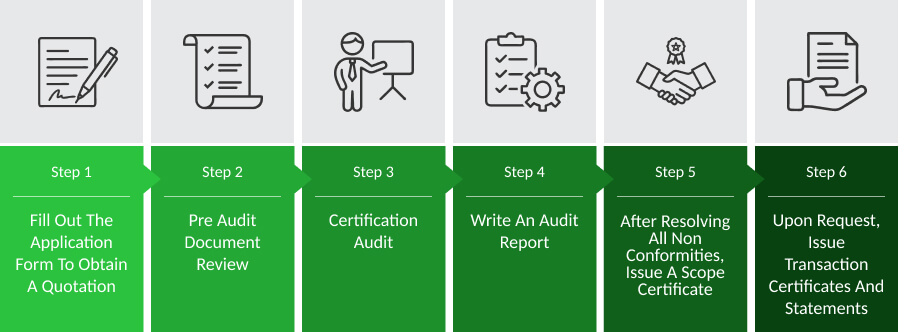
How to prepare for Good Agricultural Practice (GAP) certification
(1) Choose a base or processing plant that meets the requirements of good agricultural practices in the environment
(2) On file: Establish management system documents in accordance with standard requirements and continuously maintain effective operation
(3) In terms of operation: carry out good agricultural practices production or processing activities in accordance with standard requirements
How long does it take to obtain Good Agricultural Practice (GAP) certification results
The general certification time can be divided into three parts: the time before on-site inspection+the time from inspection to certification decision+the time for enterprise rectification=the time to obtain the certificate. The time before on-site inspection mainly depends on the time for the enterprise to prepare the materials, which means that this part of the time is controlled by the enterprise itself. The time from on-site inspection to certification decision issuance is 30 days: the time for enterprise rectification also depends on the speed of enterprise rectification, which is still controlled by the enterprise itself. The entire process, from applying for certification to obtaining the certificate, can be completed in two to three months with the active cooperation of the enterprise.
The use of Good Agricultural Practice (GAP) certification certificates and logos
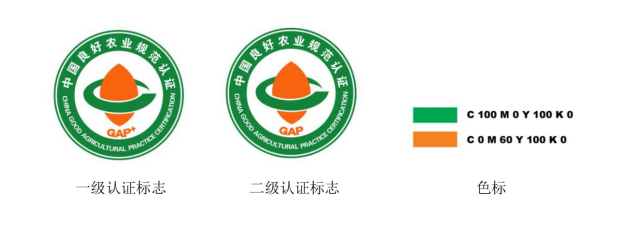
(1) The Good Agricultural Practice certification mark is divided into a first level certification mark and a second level certification mark, as shown in the following figure:
(2) The use of certification certificates and certification marks shall comply with the provisions of the "Management Measures for Certification Certificates and Certification Marks" (General Administration of Quality Supervision, Inspection and Quarantine Order No. 63 of 2004).
(3) Certificate holders may use the certification mark in certified products or their sales packaging, product promotional materials, and business activities.
(4) The certification mark can be enlarged or reduced proportionally when used, but it is not allowed to deform or change color.
(5) When using the certification mark, the registration number should be marked under the certification mark.
(6) Certificate holders should exercise effective control over the use and display of certification certificates and certification marks.
(7) Certificate holders shall not use certification certificates or certification marks to confuse certified products with non certified products and mislead the public.
(8) When the legal entity of the certificate holder changes (such as the owner of a farm, change in the nature of the unit, etc.), the certification certificate cannot be transferred from one legal entity to another. In this case, it is required to conduct an initial inspection of the new legal entity.
Validity period of certificate of good agricultural practices
Generally speaking, the certificate of Good Agricultural Practice certification is valid for one year and requires annual reapplication, inspection, and payment of fees.
Why do companies need to apply for Good Agricultural Practice certification
(1) By obtaining Good Agricultural Practice (GAP) certification, the standardization level of agricultural production can be improved, which is beneficial for enhancing the intrinsic quality and safety of agricultural products and boosting consumer confidence.
(2) By obtaining Good Agricultural Practice (GAP) certification, agricultural standardization can be implemented at the operational level, thereby enhancing the competitiveness of China's conventional agricultural products in the international market and promoting the export of certified agricultural products.
(3) Through Good Agricultural Practice (GAP) certification, its sales price is higher than non certified similar products. Therefore, GAP certification can enhance the added value of products, thereby increasing the income of certified enterprises and producers.
(4) Obtaining Good Agricultural Practice (GAP) certification will become an important condition for China's agricultural product exports. GAP certification has been widely recognized internationally, and implementing Good Agricultural Practice certification is becoming an important measure to enhance international trust and eliminate technical barriers in international trade of agricultural products.
(5) By obtaining Good Agricultural Practice (GAP) certification, companies will be published on the EUREPGAP website in Europe and/or the website of certification bodies in China. Therefore, GAP certification can enhance the company's image and visibility.
(6) Obtaining Good Agricultural Practice (GAP) certification is beneficial for enhancing producers' safety and environmental awareness, and for protecting the physical health of workers.
(7) Obtaining Good Agricultural Practice (GAP) certification is beneficial for protecting the ecological environment and increasing biodiversity in nature, promoting ecological balance and sustainable development of agriculture.
Certification fees for Good Agricultural Practices certification
The cost of Good Agricultural Practice (GAP) certification depends on many factors, such as the standards that the enterprise needs to apply for certification, the type of operation, the product variety applied for certification, and the complexity of the operation. We recommend that you fill out our application form to obtain an accurate quotation.