



Japan Organic Certification (JAS)
What is Japan Agricultural Standard (JAS) organic product certification
The act of inspecting the product range, process range, and site range of a company and issuing organic certificates in accordance with the requirements of the Japanese Organic Products Act.
Legal and regulatory system
T-JAS.1833 Technical Standards for Certification of Repackagers of Organic Agricultural Products, Processed Foods, Feed, and Livestock Products (No. 1833)
T-JAS.1831 Certification Technical Specification for Organic Processed Food and Feed Manufacturers (No. 1831)
T-JAS.1830 Technical Specification for Certification of Managers in Organic Agricultural Products and Feed Production Processes (No. 1830)
T-JAS.1606 Japanese Agricultural Standards - Organically Processed Food (No. 1606)
T-JAS.1605 Japanese Agricultural Standards - Organic Agricultural Products (No. 1605)
Which enterprises need to apply for Japan Agricultural Standard (JAS) organic product certification
Enterprises that need to export "organic" products to the Japanese market or markets equivalent to the Japanese standard
Which products can apply for Japanese Standard (JAS) organic product certification
Applicable to products involved in production (such as planting, edible fungi, and collection), processing, and repackaging. (Exclusions: products not intended for human consumption, such as planting or processing products, livestock and poultry products, and aquatic animal products)
certification process
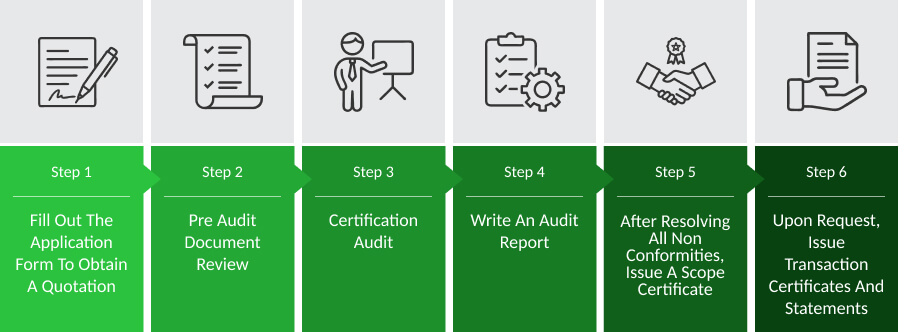
How to prepare for Japanese Standard (JAS) organic product certification
(1) Selecting bases or processing plants that meet the requirements of the Japanese Standard for Agricultural Products (JAS)
(2) Documentation: Establish a series of management system documents in accordance with standard requirements, and continuously maintain their effective operation
(3) Operationally: Conduct organic production or processing activities in accordance with standard requirements
Time for obtaining the certification results of Japanese Standard (JAS) organic products
The general certification process can be divided into three parts: the time before on-site inspection + the time from inspection to certification decision + the time for enterprise rectification = the time to obtain the certificate. The time before on-site inspection mainly depends on the enterprise's preparation time for materials, which means this part of time is controlled by the enterprise itself. The time from on-site inspection to the issuance of the certification decision is 30 days, and the enterprise rectification time also depends on the speed of the enterprise's rectification, which is also controlled by the enterprise itself. The entire process, from applying for certification to obtaining the certificate, can be completed within two to three months with the active cooperation of the enterprise.
Entering the Japanese market, the Japan Agricultural Standard (JAS) organic product logo and label are required
The graphic and color requirements for the Japanese organic product certification mark are shown in the figure below. Please follow the following principles for printing:
The JAS logo, excluding the name of the certification body, should be at least 5 millimeters high, and its shape and proportion must not be altered. JAS organic products should be jointly marked with the JAS logo and the information of the certification body. We can provide a design version of the logo.
Our organization can provide relevant label samples and usage guidelines. If you need, please contact us at 19983298818
The validity period of the certificate for Japanese Standard (JAS) organic product certification
Generally speaking, the validity period of an organic certification certificate is one year. An application needs to be submitted annually for inspection, and the fee also needs to be paid annually.
Why should enterprises apply for Japan Standard (JAS) organic product certification
(1) Obtaining the Japanese Standard (JAS) organic product certification can promote the construction of ecological civilization and enhance the environmental awareness of the entire population.
(2) Obtaining certification for organic products according to the Japanese Standard (JAS) can facilitate the implementation of agricultural standardization at the operational level, thereby enhancing the competitiveness of certified products in the international market and promoting the export of certified agricultural products.
(3) Obtaining certification for organic products according to the Japanese Standard (JAS) is beneficial for enhancing the inherent quality and safety level of agricultural products, as well as boosting consumer confidence.
(4) Obtaining certification for organic products according to the Japanese Standard (JAS) can facilitate the implementation of agricultural standardization at the operational level. This, in turn, enhances the competitiveness of certified products in the market, increases the added value of the products, and promotes the export of certified agricultural products, ultimately boosting the income of certified enterprises and producers.
(5) Obtaining certification for organic products according to the Japanese Standard for Agricultural Substances (JAS) is beneficial for protecting the ecological environment and enhancing biodiversity in nature. It also contributes to maintaining ecological balance in nature and promoting sustainable agricultural development.
Certification fee for organic products under Japanese Agricultural Standard (JAS)
The cost of organic certification depends on many factors, such as the standards the enterprise wishes to apply for certification, the type of operation, the variety of products being certified, and the complexity of the operation. We recommend that you fill out our application form to obtain an accurate quotation.